
About Flavour Origins
Food has a story.
We think you should be able to taste it.
We're curious about great flavour, where it comes from, and the people and places behind it. Flavour Origins is our way of sharing the things we think deserve to be discovered.
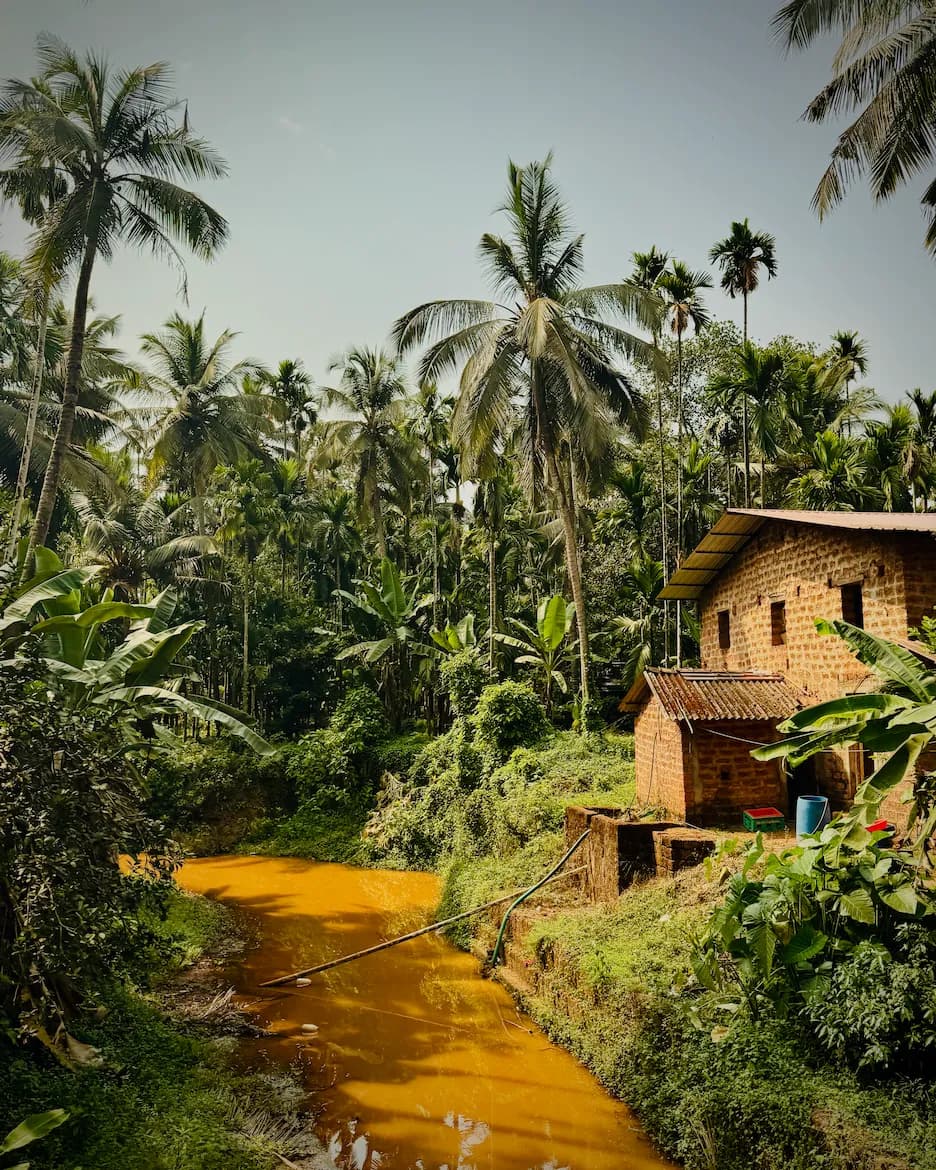
Spice farm, Goa, India - one of many places that has fed our curiosity about flavour.
01Our story
It started with food.As most good stories do.

Flavour Origins didn't begin with a business plan or a search for the next big snack. It started with the things we already loved: good food, great coffee, the occasional overly ambitious cocktail, and travelling to places where eating is one of the best ways to understand where you are.
We're Beau and Sri, partners in life and now in snacks too. We met in Bristol while Sri was studying, and food quickly became a big part of our life together.
We cooked. We travelled. We sought out restaurants, markets and local ingredients. We spent far too long thinking about coffee and experimenting with cocktails.
And somewhere along the way, through Sri's friends from northern India, we were introduced to makhana.

Beau
Co-founderAn aerospace engineer who has spent his career working in Bristol and Toulouse. Outside engineering, there's usually an experiment involving food, coffee or cocktails underway.

Sri
Co-founderGrew up in Bangalore before moving to Bristol to study Robotics, and now works in higher education. Food has always been a connection to home, as well as a way of discovering somewhere new.
“We didn't set out looking for a snack to launch. We found something we loved and started asking why more people didn't know about it.”
02Then came makhana
First we ate it.
Then we started making it our own.
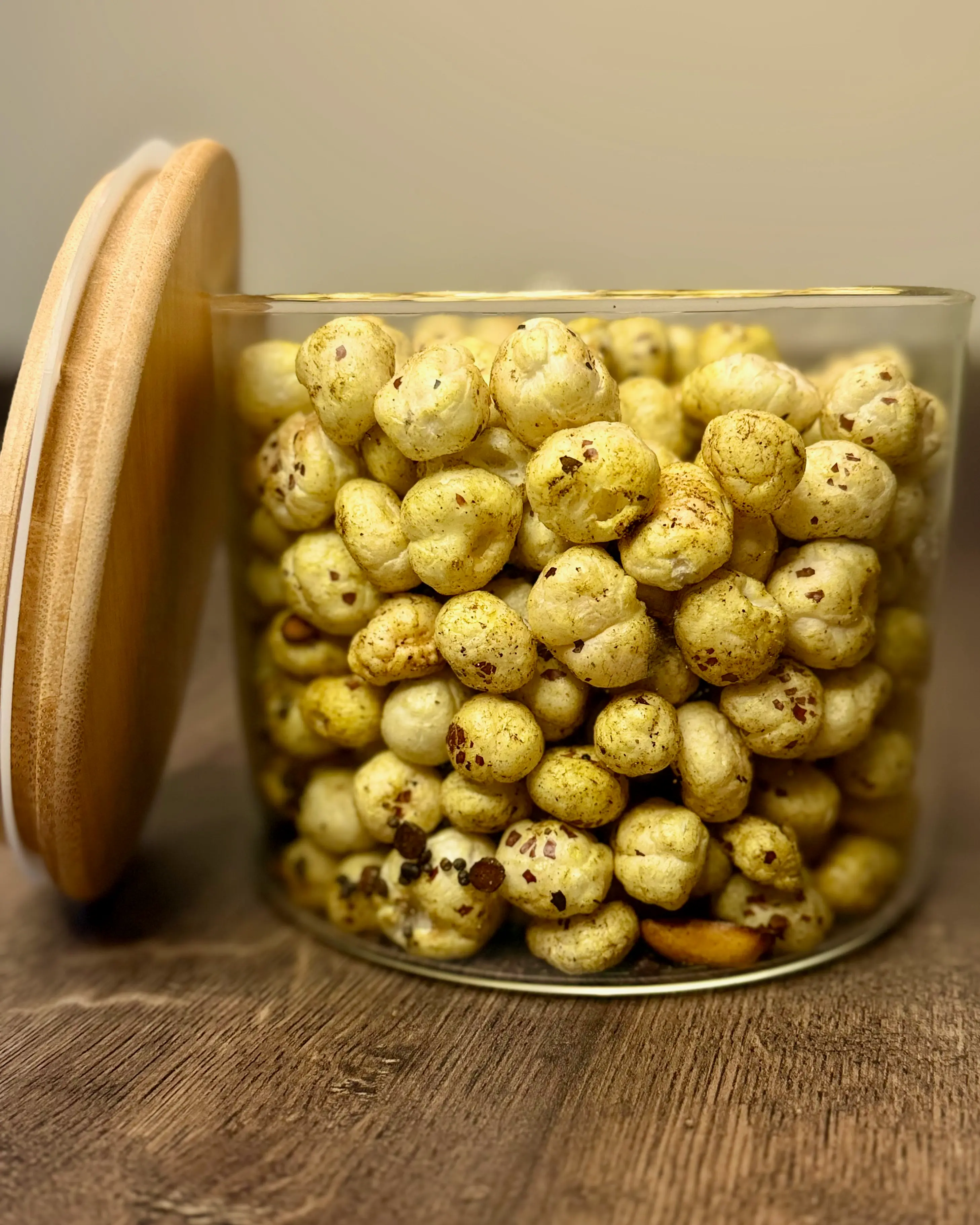
Makhana has been eaten in India for generations, particularly in the north of the country. It comes from the seeds of the prickly waterlily, which become remarkably light and crunchy when roasted.
We didn't discover it through product research or a trend report. Friends from northern India introduced us to it, and before long we were seeking it out ourselves in Indian and international supermarkets around the UK.
Then we started buying plain, unflavoured makhana and experimenting with our own seasonings at home — making them for ourselves and putting them out when friends and family came over.
They loved it.
Soon we found ourselves doing more than sharing the snack. We were explaining what makhana was, where it came from, and why they probably hadn't come across it before.
And that got us wondering.
How could something so established in India — and something everyone we shared it with seemed to enjoy — still be so unfamiliar to most people in the UK?
03The idea
We thought makhana deserved a bigger audience.
The more we looked, the more we realised there was a gap.
Makhana was already available in the UK, particularly through Indian and international supermarkets. But outside those spaces, it was still surprisingly unfamiliar.
For something we had come to love — and that our friends and family enjoyed whenever we shared it — we kept wondering why it wasn't part of the wider UK snacking conversation.
We didn't want to change makhana into something unrecognisable.
We wanted to build a bridge.
For us, that meant developing bold flavours for a wider audience while keeping the ingredient and its origins at the heart of the product.
It meant creating something that could make someone curious enough to pick up a pack for the first time — through flavour, design and the story behind what they were eating.
We wanted to make makhana feel accessible without removing the context that makes it interesting in the first place.
That idea became Flavour Origins.
Flavour & discovery
Food has always been one of the ways we understand somewhere new.
Travelling has made us more curious about ingredients, flavour and the food traditions behind them. That curiosity became part of Flavour Origins too.
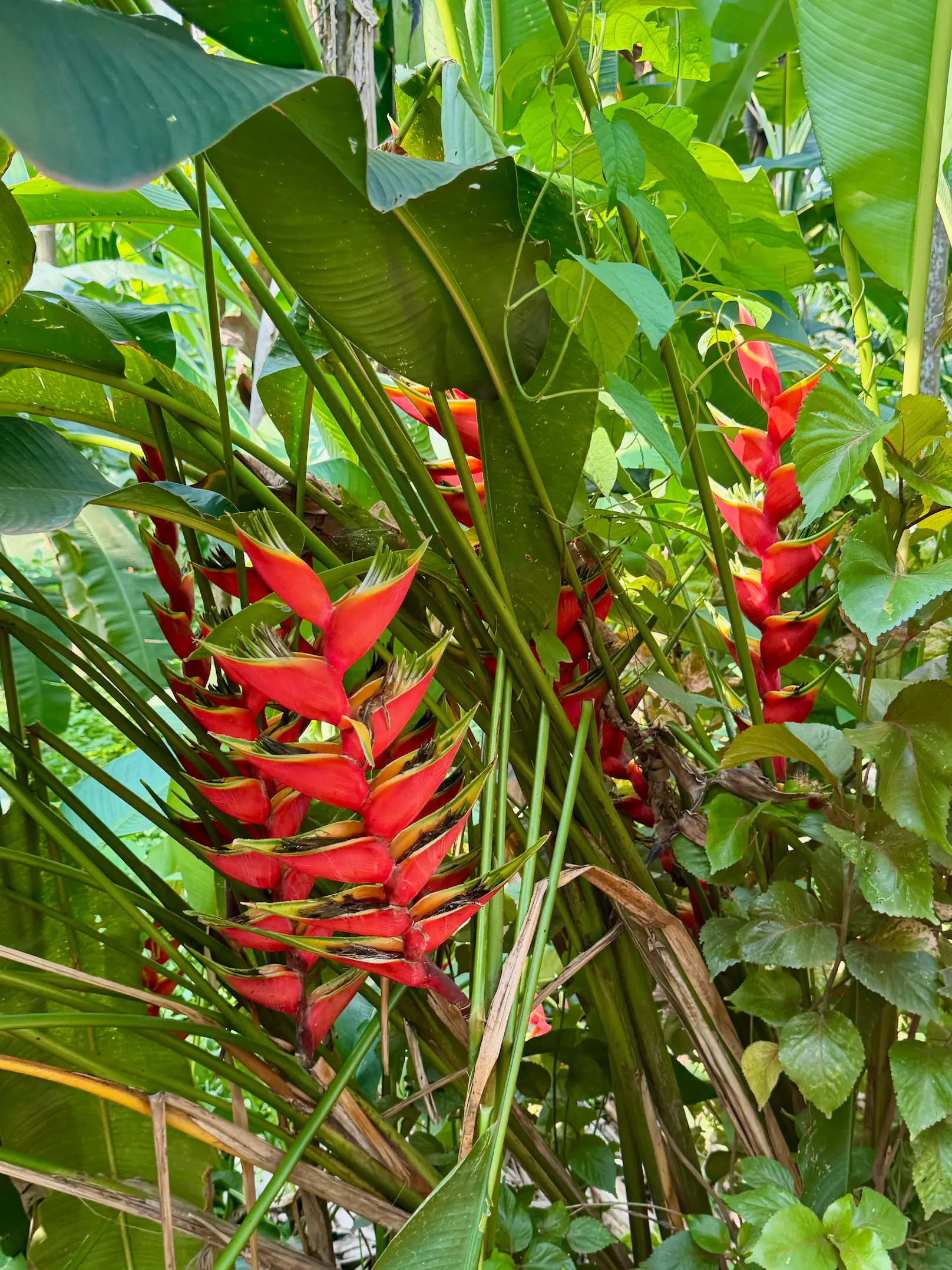
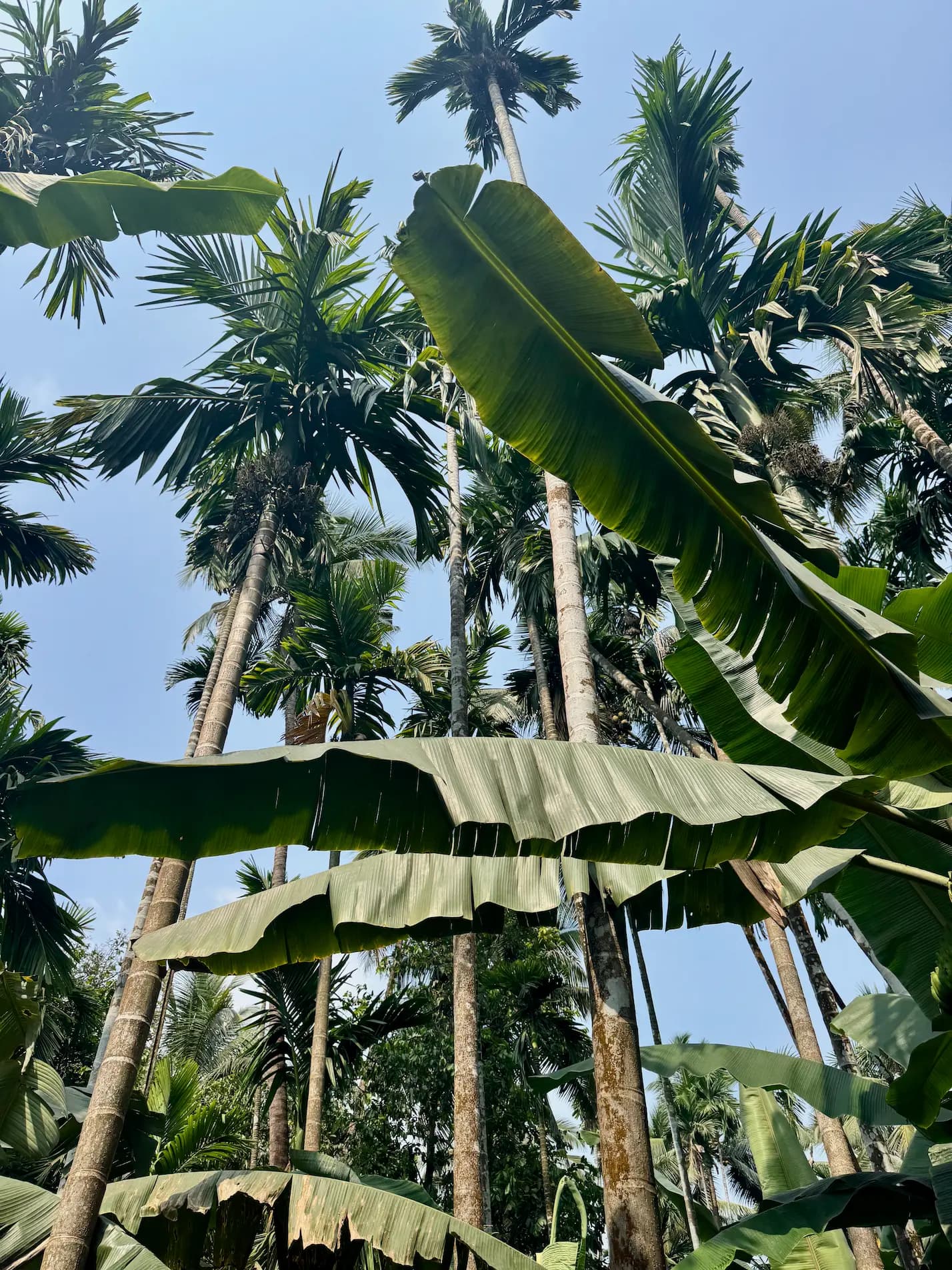
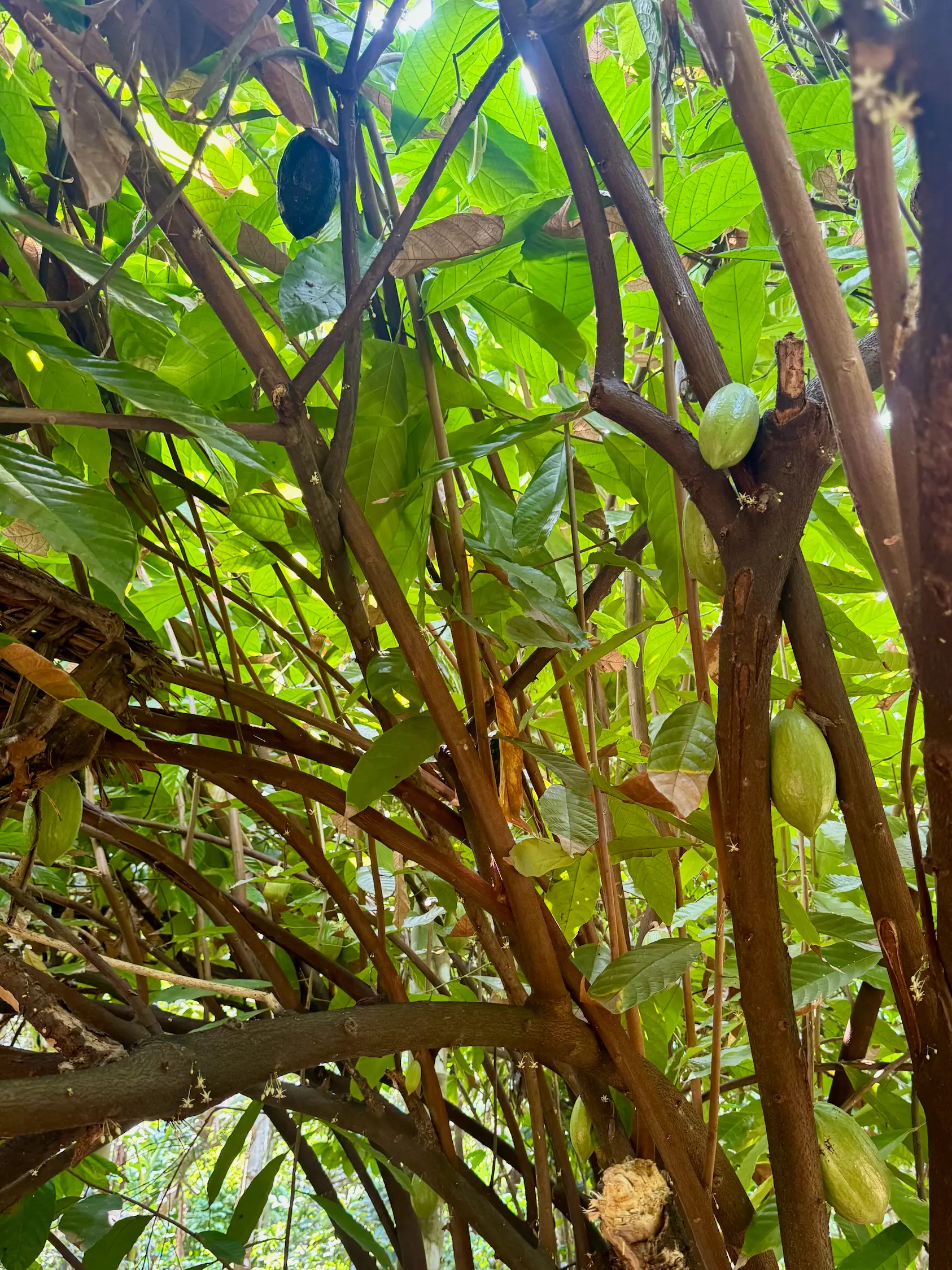
Spice farm, Goa, India — photographs from our travels.
04What matters to us
Because the origin is part of the flavour.
The more we worked on Flavour Origins, the more we realised that the things we find most interesting about food are often the things that disappear by the time it reaches the shelf.
Where did an ingredient come from? How is it eaten there? What makes it distinctive? What people, places and traditions sit behind it?
We think knowing a little more makes good food even more interesting.
That's what we want Flavour Origins to do: make flavour, ingredients and origin easier to discover, without turning food into a lecture.
Flavour comes first.
A great story can make food more meaningful. But first, it has to taste brilliant.
Make origin visible.
Knowing where an ingredient comes from and the story behind it makes it more interesting, not less accessible.
Respect the roots.
Introducing something to a new audience shouldn't mean erasing the people, places and food traditions that came first.
05Where next
Makhana is our first chapter.
We're starting with an ingredient that has become part of our own story — developing bold flavours for a wider audience while keeping its origins visible.
But Flavour Origins was never meant to stop at one snack.
There are more flavours, ingredients and stories we want to discover.
Whatever comes next, the idea stays the same: flavour first, respect the roots, and make the origin part of the experience.
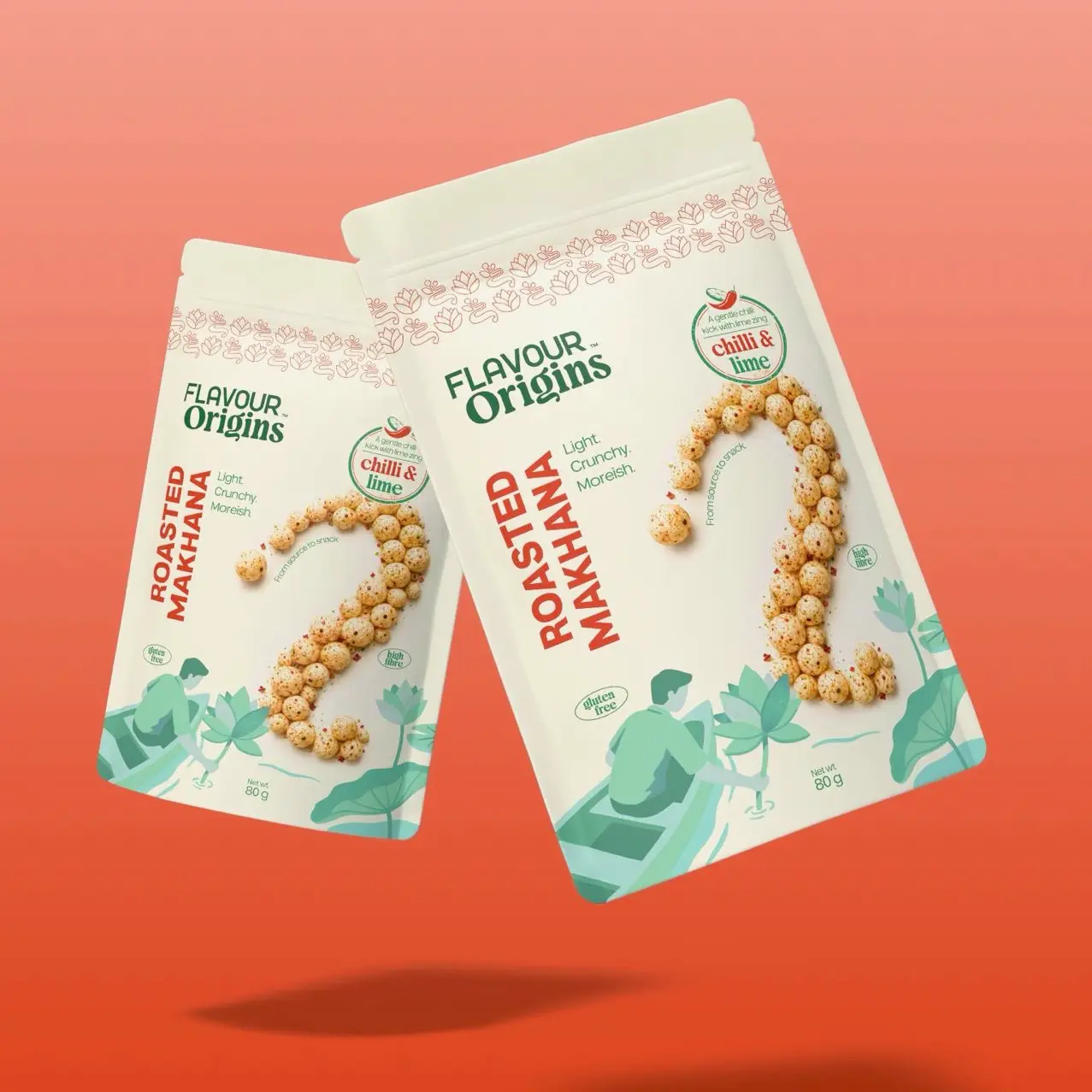
Follow the origin
For people who will always try the thing they haven't tasted before.
Our first chapter is roasted makhana — light, crunchy, boldly flavoured, and rooted in a story worth knowing.